44 articoli dell'autore Riccardo Zingone

Riccardo Zingone 20/07/2025 0

People of Halaesa Nebrodi: Martin Declève and his Royal Residence

The Story of Romei

The Contrada Romei, located in the territory of Mistretta, is one of the most iconic rural areas in the heart of the Nebrodi region. It's believed that, according to the descriptions by Silius Italicus and Polybius, the ancient city of Noma once stood here, and that the name "Romei" derives directly from the ancient inhabitants of this Greco-Roman city, the Nomei.

Nestled along the eastern slope that winds up towards Contrada Zupardo, near the Serravalle torrent, the former Romei feudal estate was renowned for its abundant production of grapes, citrus fruits, olive oil, and various other fruits. At one time, mulberries were also extensively cultivated here, their leaves serving as food for silkworms. The fertility of the land, combined with the mild climate, encouraged the inhabitants of Mistretta to settle here, as evidenced by the numerous ancient farmhouses still present.

After 1684, the Fief was assigned to Santo Stefano di Camastra but, following various legal disputes, a portion of it returned to the ownership of the Municipality of Mistretta. This led to a sell-off, and many lands were ceded to powerful families such as the Allegra, Natoli, Salamone, Armao, and Aversa, who built prestigious villas. Over time, this district became so populous that it warranted the presence of a detachment of Mistretta's elementary school, housed in a dedicated building where dozens of children were educated. This continued until the 1960s, as recounted and documented by Nella Faillaci, a passionate local history researcher and former head of the Municipal Historical Archive of Mistretta.

Today, the former Romei Fief is experiencing a new season: many of the old families no longer exist, but several estates have gained new life thanks to the interest of numerous new owners who have decided to make these places their home. It's from this interesting regenerative impulse that our story begins.


Palazzo Natoli-Giaconia: A Pearl Set Among Ancient Oaks and Olive Trees

I arrive for my appointment with Martin a few minutes before the scheduled time. He had informed me of a delay shortly before but had given me permission to enter the property. As soon as I step out of the car, which had until then protected me from the summer heat and isolated me from sounds and smells, I'm literally enveloped by the beauty of the place and the incessant chirping of cicadas. There are experiences that transport us back in time, and immediately I feel immersed in an unexpected situation that deserves respect: the ancient farmhouse hosting me, the "Regale dimora" (Royal Residence, as described in pencil on a wall by a guest), radiates extraordinary energy.

I feel like a guest in a place of great sanctity and, for this reason, I move on tiptoe. Even the ancient stone pavement deserves respect, and I tread upon it with circumspection.

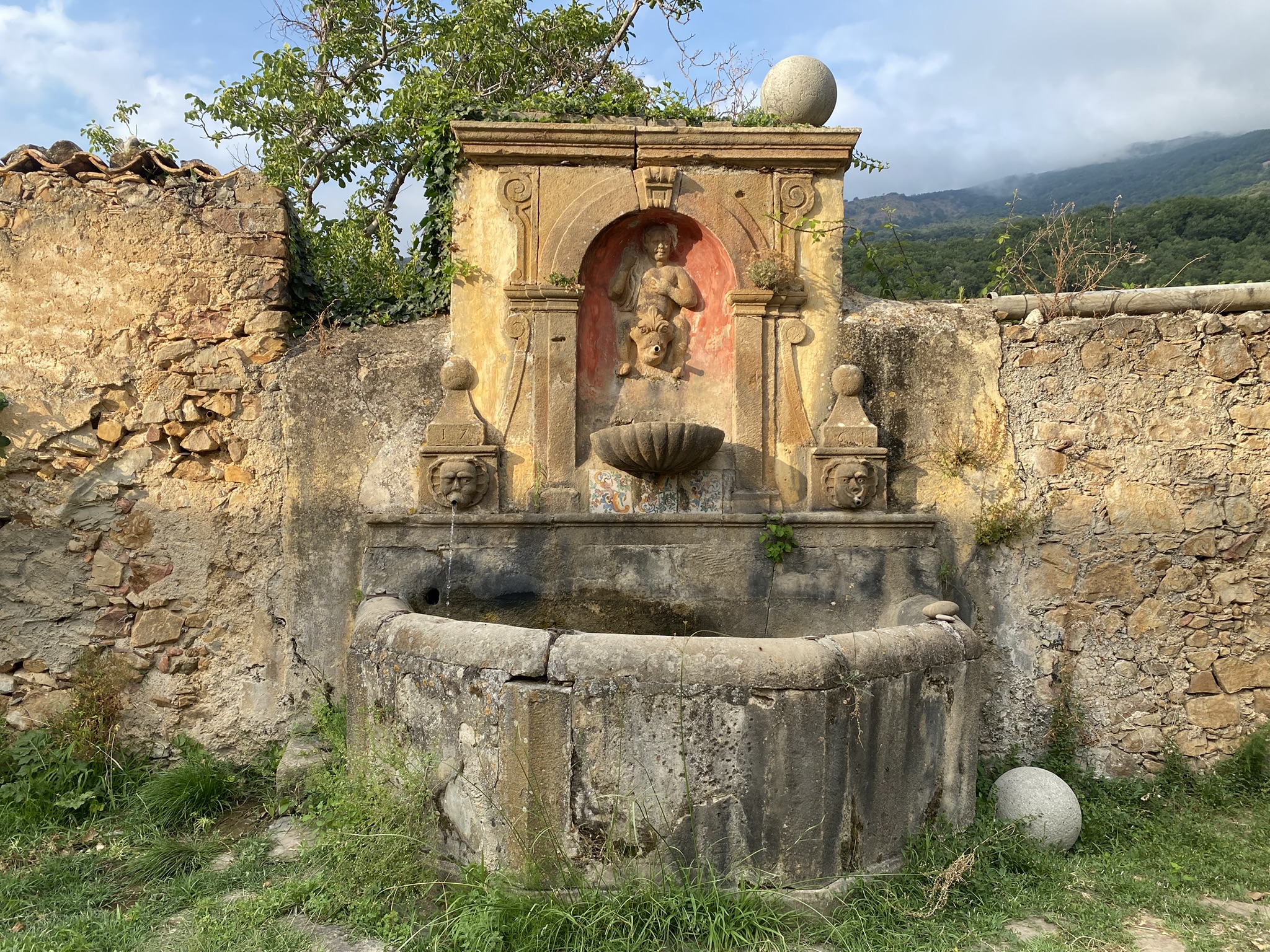
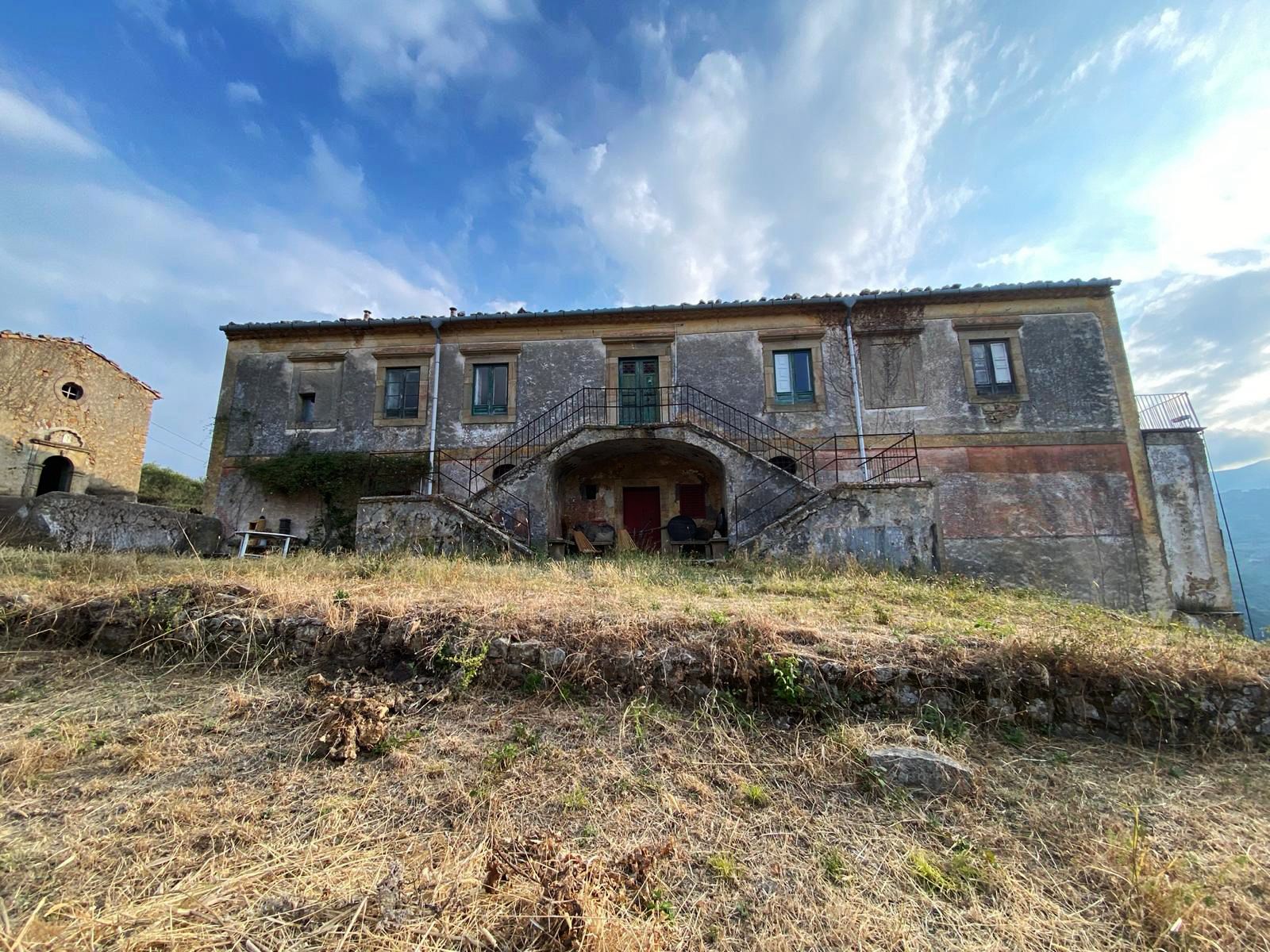
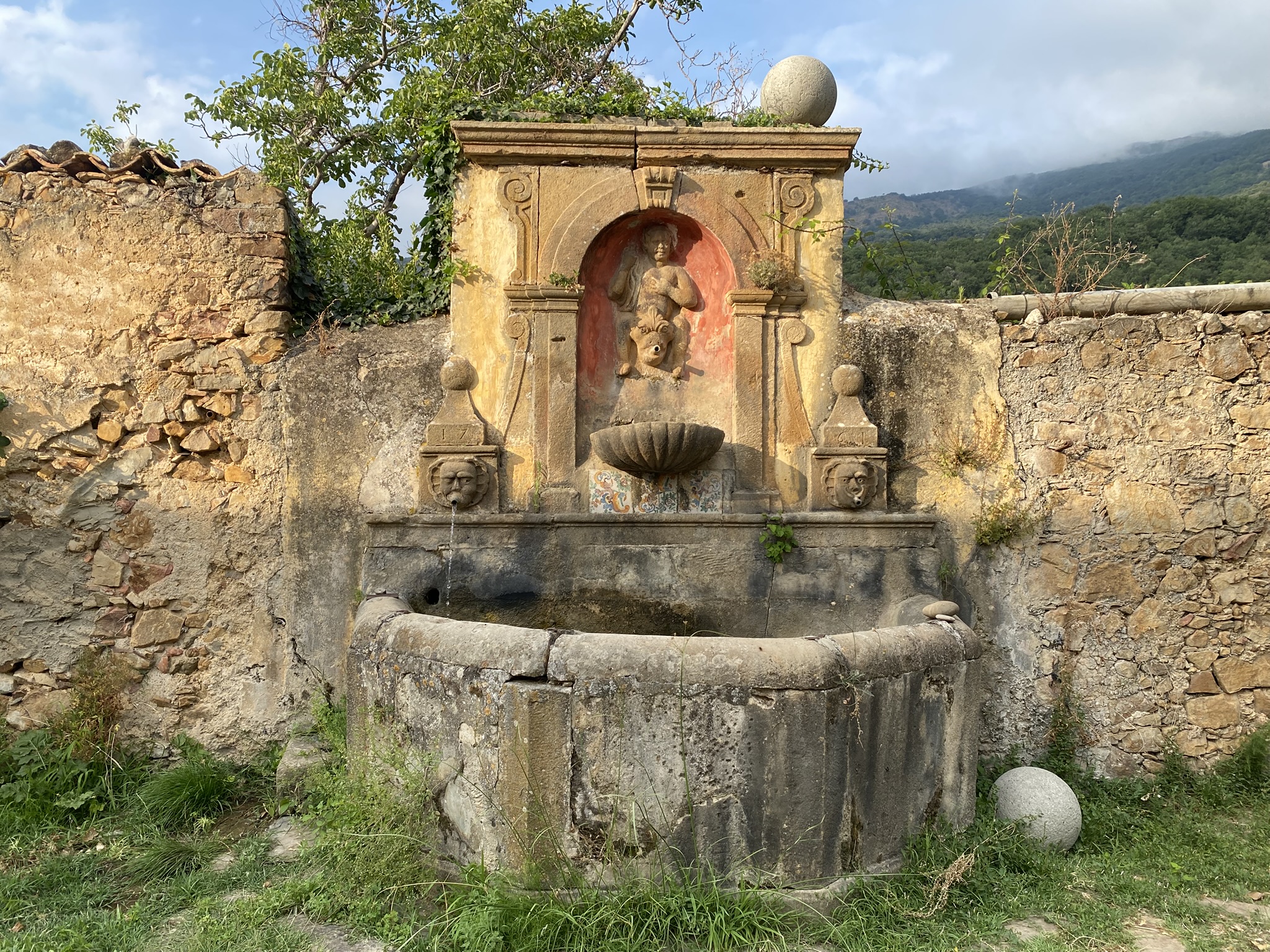
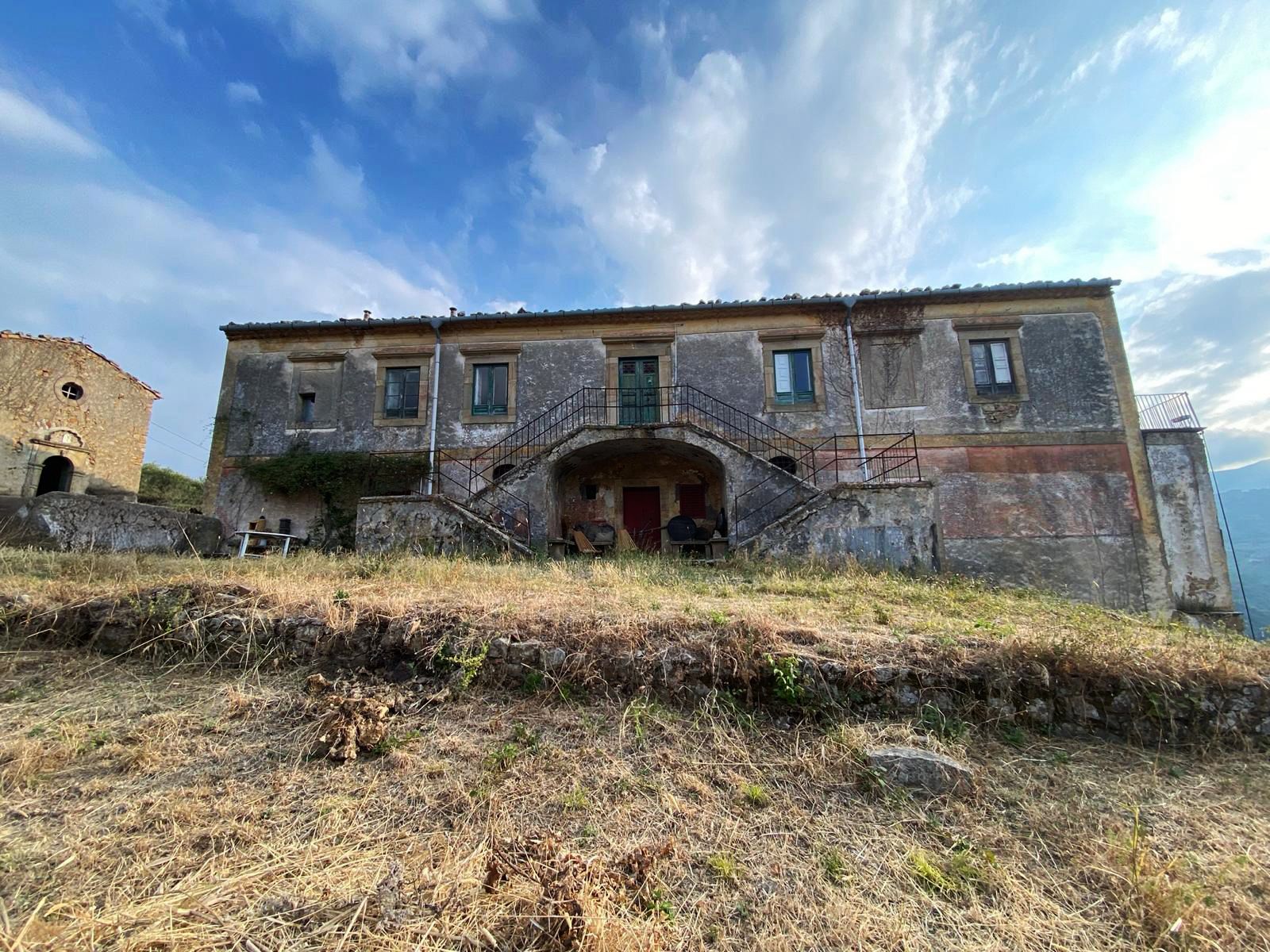
While waiting for Martin's arrival, I wander around the courtyard of the imposing, yet well-integrated, historic residence, surrounded by ancient olive trees and dense woodland. Peering here and there, my attention is immediately captured by a spectacular fountain with the date 1761 carved into it. Water flows, and there is life. The central sculpted figure is nestled in a stone niche that still retains red decorations, a characteristic also visible along the main two-story facade, which features a spectacular double-ramp staircase leading to the upper floor. Indeed, I notice how the red with which the ground floor walls were painted is still visible on the facade, which, together with yellow and green, must have given the building a particularly elegant and classical appearance. After all, we are in the midst of Neoclassicism, and the echo of the archaeological excavations of Pompeii and Herculaneum evidently reached here too, leaving its mark on this building. 


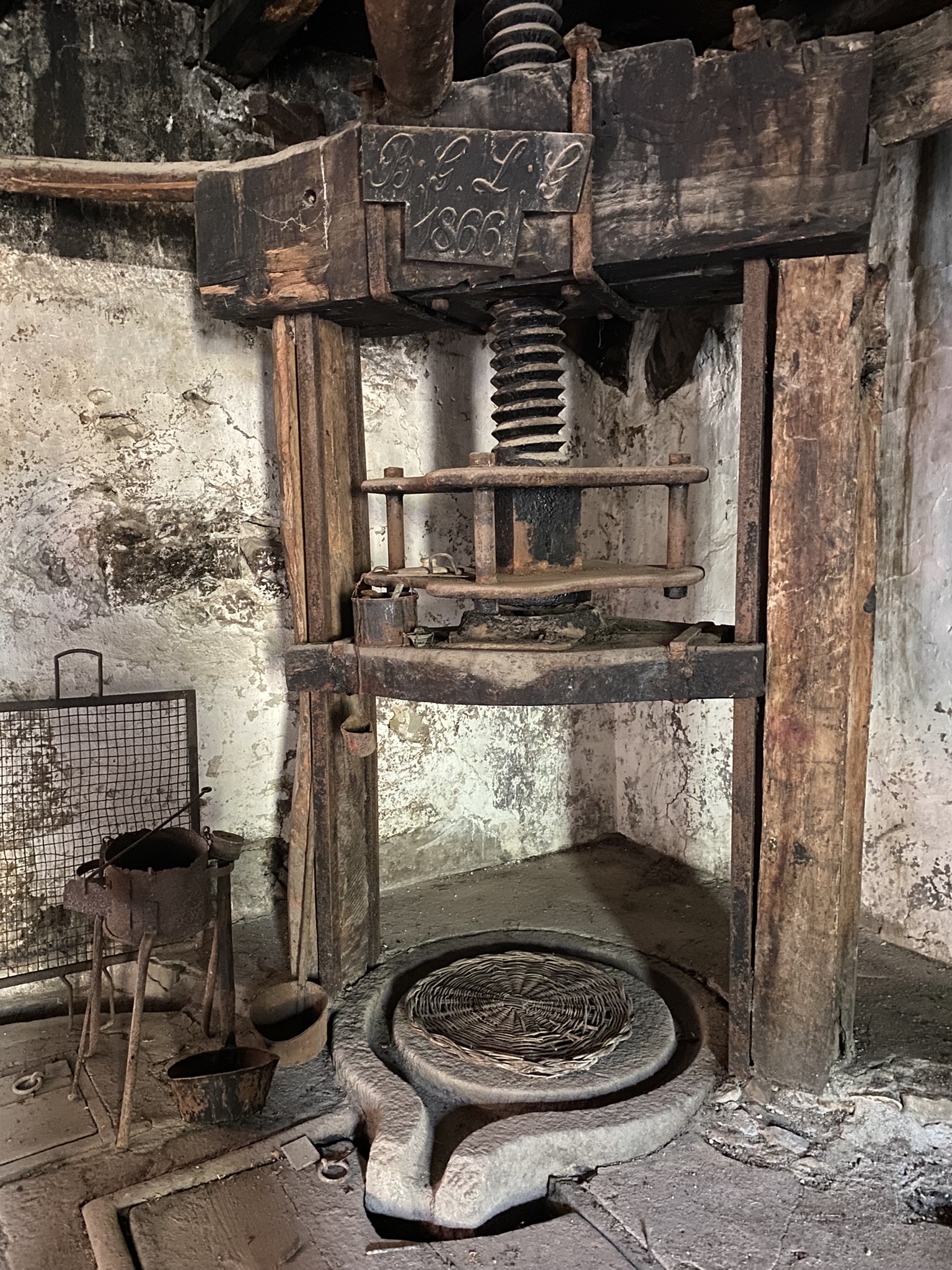
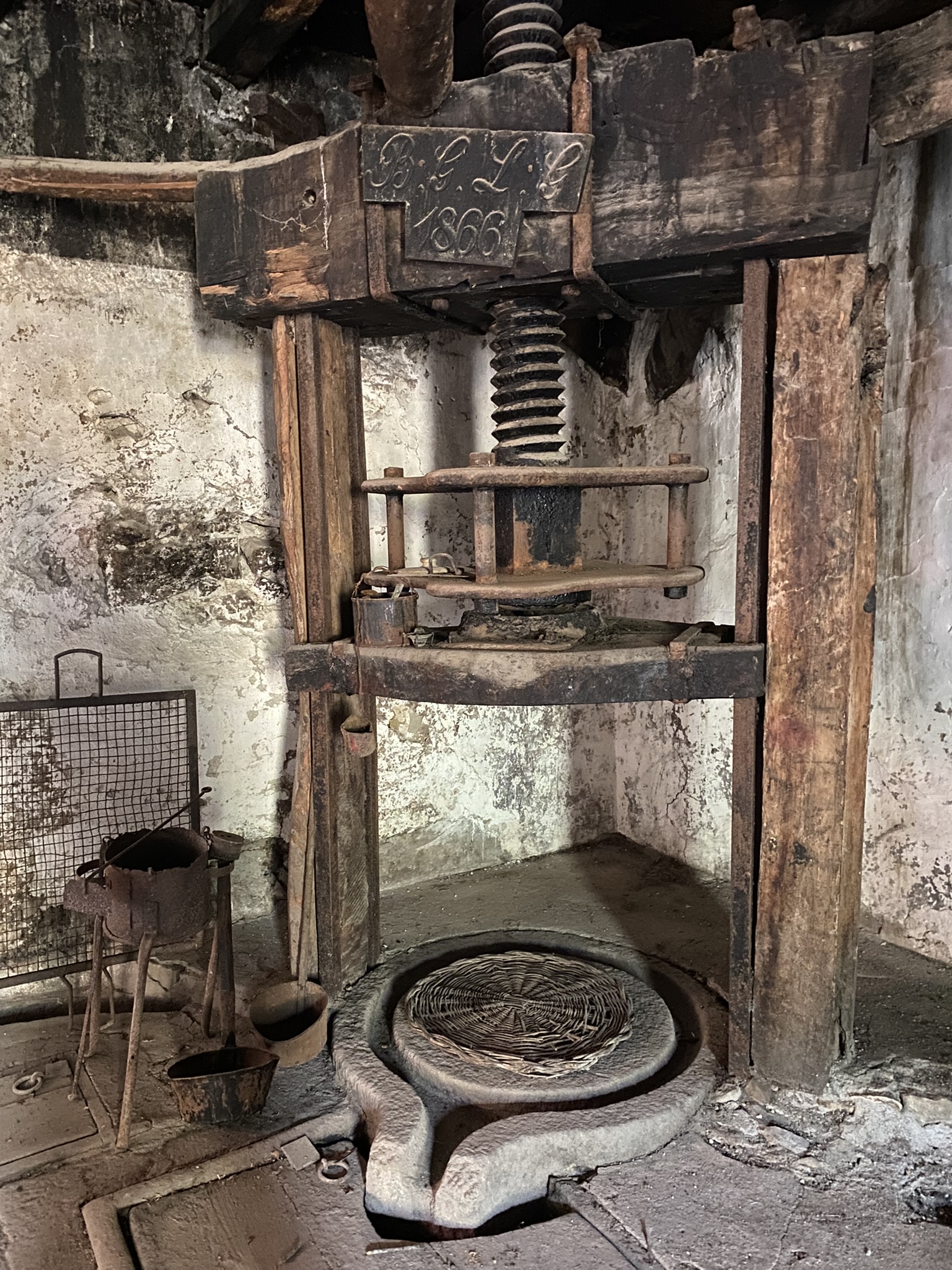
I find some doors open that lead to the warehouses where an ancient olive mill is still visible, with its enormous stone millstone and press operated by pack animals. Electricity would arrive very late in these parts, but the old owners, heirs of the Natoli-Giaconia family, had in the meantime circumvented the problem by purchasing a modern system located in another building and powered by a generator. The mill remained in operation until the 1960s, becoming the reference point for the surrounding area for olive milling.

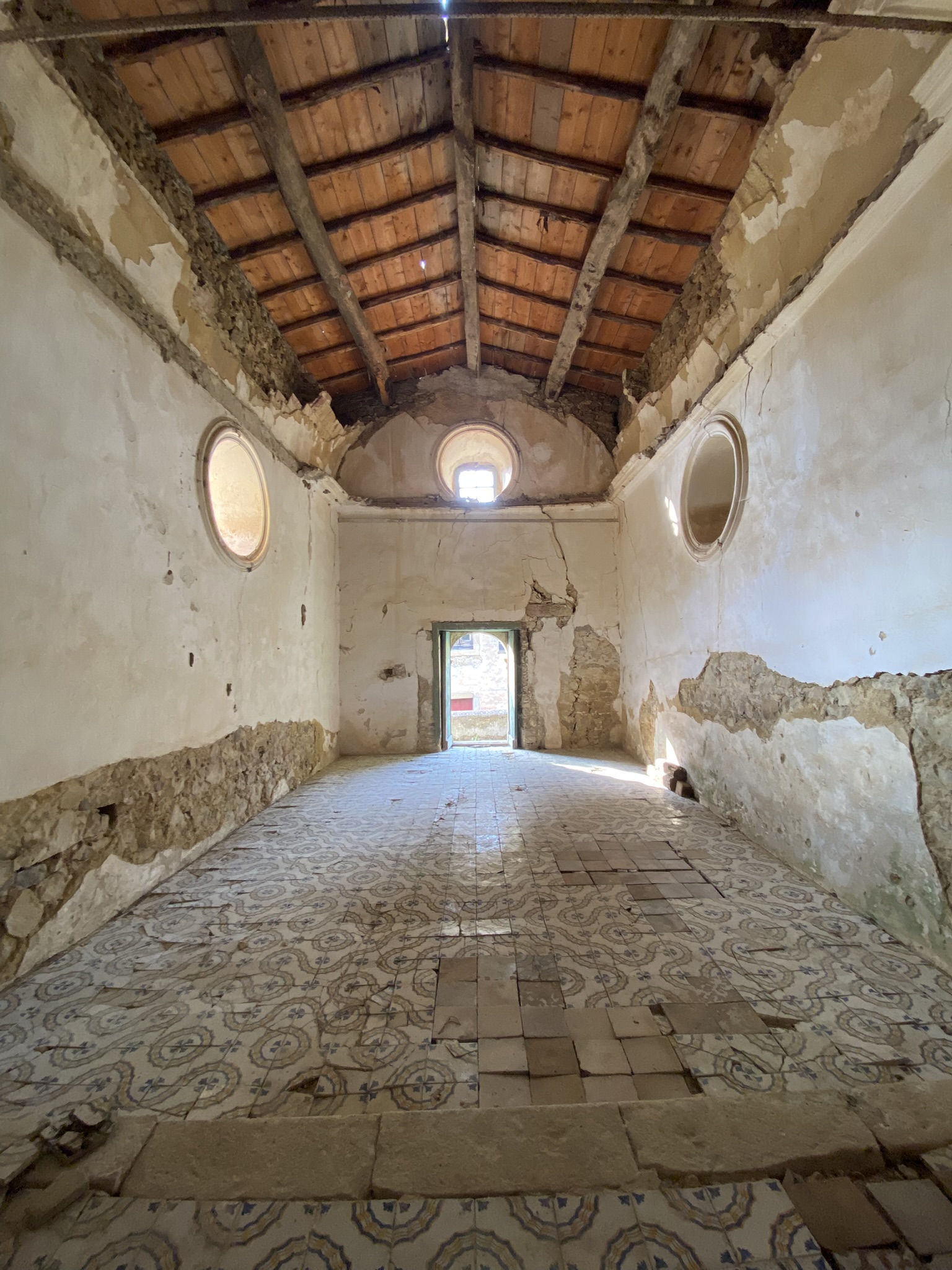
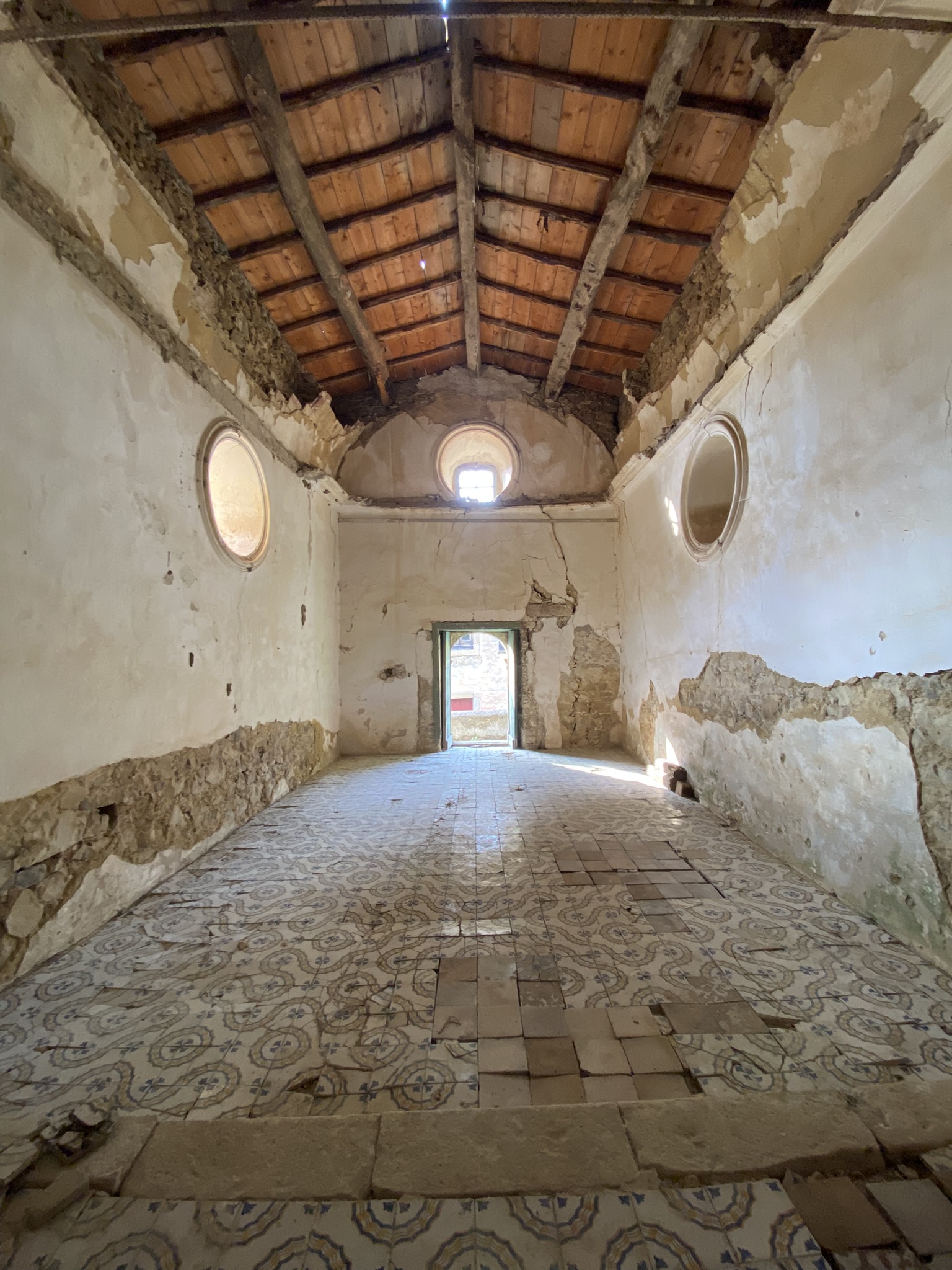
Next to the building is the completely unadorned rural church, dated 1783, with a small altar and majolica floor at the back.


Martin Décleve and Valérie Verdinne: From the Pandemic to Their Dream

The chirping of the cicadas is momentarily interrupted by the arrival of a car: it's Martin, who greets me with a warm smile, which I promptly return.

We begin sipping a cool aperitif on the terrace, which accompanies our pleasant chat, during which Martin tells me about himself and what brought him here from Belgium.

"It's a project that started a long time ago: I taught Latin and Greek for twenty-two years, and my wife Valérie inherited a family pharmacy, but we both had a desire to dedicate ourselves to art. So, at a certain point, I left teaching to pursue photography and cinematography professionally, and, with Valérie, we restored a house in Brussels together. During the pandemic, despite the restrictions, we started traveling in Italy until we arrived in Sicily, where we encountered this territory that immediately fascinated us."

"Valérie and I," Martin continues, "always thought about buying a property with special characteristics, one that would tell a story by itself, and we thought that in this area, sooner or later, we would find it. We didn't entrust our search to real estate agencies, but rather to word-of-mouth. So, thanks to common acquaintances, we were put in touch with the old owners, and after a while, our search concluded."

After the pandemic, Martin and Valérie bought the property from the Parlato-Martorana family and immediately began cleaning and recovering the grounds, but not the building itself. This was a deliberate choice. "For now, we are focusing on cleaning the eighteen-hectare land," Martin continues, "but for me, it's a real spectacle to recover it little by little. Every day is a new discovery, and that's beautiful! The goal is to clean about four hectares and leave the rest as woodland. The house will only be renovated when we fully understand which direction to take. We are looking for a model to apply, but the common ones don't satisfy us, so we will wait as long as necessary. We plan, however, to create a model that combines culture with agriculture."


The DDT Project is Born: Contemporary Art Marries History

"Two years ago, Valérie, some friends, and I spent our first summer in this place. Outside, it was still a jungle, but we all perceived the charm that emanated from the whole: peace, beauty, the land, history. In the meantime, we abandoned the idea of creating a farm holiday resort and simply dedicating ourselves to hospitality and catering. So we took a break, and now we are looking for a deeper, more spiritual purpose, creating a reality where our desire for creation can be shared. I can't imagine a day without creativity, without the desire to create, and with Valérie, we believe we can develop a life model that transmits happiness."

"We then shared the idea of setting up an exhibition now, leaving and presenting the building as we found it, using the many rooms to host the creations."

As stated in the press release, the DDT project uses the message found on the wall as the title of this initiative, but above all, it elevates it to a keyword full of expectations, in a residence that, in fact, at the moment, offers nothing regal but a rare, expansive sense of cathartic peace. Unlike A and G, the two unknown individuals who signed the graffiti with only their initials after a short stay more than one hundred and twenty years ago, Declève and Verdinne are well aware that in the long term of their stay, the undertaking will consist of "giving time back to the temporary."

Next to the entrance door, on the wall, some dates traced in red paint can be read: above, 1761, that of the foundation of the structure; on both sides of the door, dates ranging from 1948 to 1967 refer to the period of DDT spraying against malaria. Over the centuries mentioned, the place has undergone numerous transformations. But it is undoubtedly during the mid-century following the ban on the insecticide, at the end of the 1970s, that the most radical metamorphosis occurred: the conclusion of agricultural activity, the abandonment of the land, and the use of the main building, left for more than thirty years, as an occasional holiday home. The DDT years were those of the "great acceleration." Beyond the illusory desire to distance this recent past, the misappropriation of the acronym expresses the new owners' desire to make this place a place of agriculture and culture, a space where time can be given back to the provisional.


DDT project – Before leaving this royal residence

Artists: Régis Baudy, Sébastien Bonin, Alessandro Costanzo, Étienne Courtois, Martin Declève, Myriam El Haïk, Laurent Friob, Anna Guillot, Sebastiano Leta, Renee Marcus Janssen, Emmanuel Piron, Rawakari, Agostino Rocco, Alfredo Sciuto.

DDT project: Martin Declève & Valérie Verdinne Dimora del temporaneo, Mistretta, Contrada Romei, Sicily, Italy 16.08—14.09.2025 Opening: Saturday 16—Sunday 17 August

(1) Romei, crocevia dei pellegrini. Nella Faillaci, Il Centro storico-giugno 2003

Read more

Riccardo Zingone 19/07/2025 0

Gente di Halaesa Nebrodi: Martin Declève e la sua Regale Dimora

La Storia di Romei

La contrada Romei, situata nel territorio di Mistretta, è uno dei luoghi rurali più iconici del centro nebroideo. Si ritiene che in quest'area, secondo le descrizioni di Silio Italico e Polibio, sorgesse l'antica Noma, e che il nome "Romei" derivi proprio dagli antichi abitanti della città greco-romana, i Nomei.

Adagiato lungo il versante orientale che si inerpica verso contrada Zupardo, a ridosso del torrente Serravalle, l'ex feudo di Romei era noto per la ricca produzione di uva, agrumi, olio d'oliva e frutti vari. Un tempo, vi si coltivava abbondantemente anche il gelso, le cui foglie erano nutrimento per il baco da seta. La fertilità della terra unita alla mitezza del clima hanno incentivato gli abitanti di Mistretta a stabilirsi qui, come testimoniano i numerosi antichi casali ancora presenti.

Dopo il 1684, il Feudo fu assegnato a Santo Stefano di Camastra ma, a seguito di diverse vicissitudini giudiziarie, una parte di esso tornò di proprietà del Comune di Mistretta. Ebbe così inizio una svendita, e molte terre vennero cedute a potenti famiglie come gli Allegra, i Natoli, i Salamone, gli Armao e gli Aversa, che edificarono prestigiose ville. 

Nel corso del tempo, questa contrada divenne così popolosa da giustificare la presenza di un distaccamento della scuola elementare di Mistretta, ospitato in un edificio apposito dove venivano istruite alcune decine di bambini. Ciò accadde sino agli anni Sessanta, come racconta e documenta Nella Faillaci, appassionata ricercatrice di storia locale ed ex responsabile dell'Archivio Storico Comunale di Mistretta. (1)

Oggi, l'ex Feudo Romei sta vivendo una nuova stagione: molte delle antiche famiglie non esistono più, ma diverse tenute hanno riacquistato nuova linfa grazie all'interesse di numerosi nuovi proprietari che hanno deciso di fare di questi luoghi la propria dimora. È da questo interessante spunto rigenerativo che inizia il nostro racconto.

Palazzo Natoli-Giaconia: Una Perla Incastonata tra Querce e Ulivi Secolari

Arrivo all'appuntamento con Martin alcuni minuti prima dell'orario stabilito. Poco prima mi aveva avvisato di un ritardo, ma mi aveva dato il permesso di entrare nella proprietà. Appena scendo dall'auto, che fino a quel momento mi aveva protetto dalla calura estiva e isolato da suoni e odori, vengo letteralmente avvolto dalla bellezza del luogo e dal frastuono incessante delle cicale. Esistono esperienze che ci riportano indietro nel tempo, e subito mi sento immerso in una situazione inaspettata che merita rispetto: l'antico casale che mi ospita, la "Regale dimora" (come descritto a matita su un muro da un ospite del casale), trasmette un'energia straordinaria.

Mi sento ospite in un luogo dalla grande sacralità e, per questo motivo, mi muovo in punta di piedi. Persino l'antico selciato in pietra merita rispetto, e lo calpesto con circospezione.

Nell'attesa dell'arrivo di Martin, mi aggirò lungo il cortile dell'imponente, ma ben integrata, dimora storica, circondata da ulivi secolari e da una fitta boscaglia. Sbirciando qua e là, la mia attenzione viene subito catturata da una scenografica fontana che riporta scolpita la data 1761.

L'acqua scorre, e c'è vita. La figura centrale scolpita è accolta in una nicchia in pietra che conserva ancora delle decorazioni in rosso, una caratteristica che si può notare anche lungo la facciata principale a due piani del prospetto, corredata da una scenografica scala a doppia rampa che conduce al piano superiore. Noto, infatti, come nel prospetto si intraveda ancora il rosso con cui erano state dipinte le pareti del piano terra che, insieme al giallo e al verde, dovevano conferire alla costruzione un aspetto particolarmente elegante e classicheggiante. D'altronde, ci troviamo in pieno neoclassicismo, e l'eco degli scavi archeologici di Pompei ed Ercolano è evidentemente giunta anche qui, lasciando traccia in questo edificio.


Trovo aperte alcune porte che introducono ai magazzini dove è ancora visibile un antico frantoio con l'enorme mole in pietra ed il torchio azionati da animali da soma. La corrente elettrica da queste parti arriverà molto tardi ma i vecchi proprietari, eredi della famiglia Natoli-Giaconia, nel frattempo avevano arginato il problema acquistando un moderno impianto collocato in un altro edificio e alimentato da un gruppo elettrogeno. Il frantoio restò in funzione fino agli anni sessanta diventanto il punto di riferimento dell'area circostante per la molitura delle olive.  


Accanto l'edificio la chiesetta rurale completamente disadorna datata 1783, con in fondo un piccolo altare e pavimento in maiolica.   


Martin Décleve e Valérie Verdinne: Dalla Pandemia al Loro Sogno

Il frastuono delle cicale viene momentaneamente interrotto dall'arrivo di un'automobile: è Martin, che mi accoglie con un caldo sorriso, prontamente ricambiato.

Iniziamo a sorseggiare un fresco aperitivo in terrazza, che ci accompagna lungo la piacevole chiacchierata, durante la quale Martin mi racconta di sé e di ciò che lo ha spinto dal Belgio fin qui.

"È un progetto che nasce molto lontano: io ho insegnato latino e greco per ventidue anni e mia moglie Valérie ha ereditato una farmacia di famiglia, ma entrambi avevamo il desiderio di dedicarci all'arte. Così, ad un certo punto, ho abbandonato l'insegnamento per occuparmi professionalmente di fotografia e cinematografia, e, con Valérie, abbiamo restaurato insieme una casa a Bruxelles. Durante la pandemia, nonostante le restrizioni, iniziamo a viaggiare in Italia fino ad arrivare in Sicilia, dove veniamo a contatto con questo territorio che ci affascina immediatamente."

"Io e Valérie", prosegue Martin, "abbiamo sempre pensato di acquistare un immobile con delle caratteristiche speciali, che da solo raccontasse una storia, e abbiamo pensato che in questa zona, prima o poi, lo avremmo trovato. Non abbiamo affidato la nostra ricerca ad agenzie immobiliari, ma piuttosto al passaparola. Così, grazie a conoscenze comuni, siamo stati messi in contatto con i vecchi proprietari e, dopo un po' di tempo, la nostra ricerca si è conclusa."

Finita la pandemia, Martin e Valérie acquistano la proprietà proveniente dalla famiglia Parlato-Martorana e subito avviano i lavori di pulizia e recupero, ma non dell'immobile. Questa è stata una scelta precisa. "Per adesso ci stiamo occupando della pulizia del terreno che misura diciotto ettari", continua Martin, "ma per me è un vero spettacolo recuperarlo poco alla volta. Ogni giorno è una nuova scoperta e questo è bellissimo! L'obiettivo è pulirne circa quattro ettari e il resto lasciarlo come bosco. La casa sarà ristrutturata solamente quando capiremo fino in fondo quale direzione prendere. Siamo alla ricerca di un modello da applicare, ma quelli comuni non ci soddisfano, dunque attenderemo il tempo necessario. Pensiamo, comunque, di creare un modello che unisca la cultura con l'agricoltura."

Nasce il DDT Project: L'Arte Contemporanea si Sposa con la Storia

"Due anni fa, con Valérie e alcuni amici, abbiamo trascorso la prima estate in questo posto. Fuori era ancora una giungla, ma tutti abbiamo percepito il fascino che emanava l'insieme: la pace, la bellezza, la terra, la storia. Nel frattempo abbiamo abbandonato l'ipotesi di realizzare un agriturismo e dedicarci semplicemente alla ricettività e alla ristorazione. Dunque ci siamo presi una pausa e adesso siamo alla ricerca di uno scopo più profondo e spirituale, creando una realtà dove la nostra voglia di creazione possa essere condivisa. Non riesco a immaginare un giorno senza creatività, senza voglia di fare, e con Valérie crediamo di sviluppare un modello di vita che trasmetta felicità."

"Abbiamo quindi condiviso l'idea di allestire una mostra adesso, lasciando e presentando il fabbricato così come lo abbiamo trovato, utilizzando le tante stanze per ospitare le realizzazioni."

Così come riportato nel comunicato stampa DDT project fa del messaggio trovato sul muro il titolo della presente iniziativa, ma soprattutto lo eleva a parola d’ordine carica di aspettative, in una residenza che in effetti, al momento, di regale non consente altro che un raro dilatato senso di catartica pace. Al contrario di A e G, i due sconosciuti che firmarono il graffito con le sole iniziali dopo un breve soggiorno più di centoventi anni fa, Declève e Verdinne sono ben consapevoli che nel tempo lungo della loro permanenza, l’impresa consisterà nel “restituire tempo al temporaneo”.
Al lato della porta d’ingresso, sulla parete si leggono alcune date tracciate con vernice rossa: sopra, 1761, quella della fondazione della struttura; su entrambi i lati della porta, dati che vanno dal 1948 al 1967 si riferiscono all’epoca dell’irrorazione del D.D.T. contro la malaria. Nel corso dei secoli citati, il luogo ha subito numerose trasformazioni. Ma è senza dubbio durante la metà del secolo successivo alla messa al bando dell’insetticida, alla fine degli anni ‘70, che si verifica la metamorfosi più radicale: la conclusione dell’attività agricola, l’abbandono dei terreni e l’utilizzo dell’edificio principale lasciato da più di trent’anni, come casa di villeggiatura occasionale. Gli anni del D.D.T. furono quelli della “grande accelerazione”. Al di là del desiderio illusorio di allontanare questo recente passato, l’appropriazione indebita dell’acronimo esprime la volontà dei nuovi proprietari di fare di questo luogo un luogo di agricoltura e cultura, uno spazio dove restituire tempo al provvisorio.

DDT project-Prima di lasciare questa regale dimora

Régis Baudy, Sébastien Bonin, Alessandro Costanzo, Étienne Courtois, Martin Declève, Myriam El Haïk, Laurent Friob, Anna Guillot, Sebastiano Leta, Renee Marcus Janssen, Emmanuel Piron, Rawakari, Agostino Rocco, Alfredo Sciuto.

DDT project : Martin Declève & Valérie Verdinne
Dimora del temporaneo, Mistretta, Contrada Romei, Sicilia, Italia
16.08―14.09.2025
Opening : Sabato 16―domenica 17 agosto


(1) Romei, crocevia dei pellegrini. Nella Faillaci, Il Centro storico-giugno 2003

Leggi tutto

Riccardo Zingone 16/07/2025 0

Campanilismo e Marketing Territoriale in Halaesa Nebrodi

Agosto è alle porte e, finalmente, i Comuni di Halaesa Nebrodi hanno iniziato a pubblicare i cartelloni degli eventi estivi, offrendo un ricco intrattenimento a residenti e visitatori. [Qui il link per una visione completa e costantemente aggiornata].

L'offerta, come da tradizione, è variegata, spaziando dallo sport alle sagre, dalla cultura al teatro, e naturalmente, agli appuntamenti religiosi. Questi ultimi sono spesso affiancati da eventi musicali di grande richiamo, culminanti con gli immancabili spettacoli pirotecnici.


La Lungimiranza dei Nostri "Padri": Un Esempio di Marketing Ante Litteram

Un'attenta osservazione dei programmi comunali in Halaesa Nebrodi rivela un aspetto affascinante: non esiste una singola data in cui cadano contemporaneamente due importanti festività religiose. Trovo davvero interessante come i nostri "padri" abbiano avuto la lungimiranza di individuare, Comune per Comune, i giorni dedicati alle principali ricorrenze religiose e feste patronali, evitando accuratamente sovrapposizioni. Questo permetteva a tutti di recarsi, seppur in giorni diversi, nei vari paesi, alimentando così la propria fede.

Evidentemente, già allora era maturata una consapevolezza e sensibilità così profonde da far sentire ciascun abitante di una singola comunità parte integrante di un intero territorio, quantomeno nella fede. Il rintocco delle campane, pur provenendo da un singolo e specifico campanile, sembrava diffondersi a decine di chilometri di distanza, richiamando fedeli dai paesi vicini. Un eccellente esempio di visione, rispetto dei culti e lungimiranza da seguire e da applicare anche in chiave non strettamente religiosa. Se allora si poteva parlare di semplice e genuino buon senso, oggi, in un tempo in cui gli avvenimenti religiosi sono considerati anche attrattori turistici, potremmo inquadrare questa buona pratica nell'ambito del marketing territoriale.


Campanilismo e Marketing Territoriale: Un Rapporto Complesso

Ragionando in termini di marketing territoriale, il termine "campanilismo" assume, di norma, un significato decisamente negativo, contrapponendosi al concetto stesso di promozione del territorio.

Se è vero, infatti, che il campanilismo è sinonimo di una valorizzazione eccessiva delle proprie peculiarità, è altrettanto vero che si rischia con molta facilità di far scivolare una singola comunità verso l'isolamento, favorendo l'innalzamento di barriere decisamente controproducenti. Questo atteggiamento miope non guarda al territorio e alle sue interconnessioni, non genera valore e benessere, e ha inevitabili ripercussioni anche sul giudizio di chi ci osserva da lontano, inclusi turisti e investitori.

Un interessante studio condotto dall’Osservatorio Italiano sul Turismo ha evidenziato come l’implementazione di strategie di marketing territoriale efficaci possa aumentare il numero di visitatori fino al 30% in tre anni, generando non solo entrate turistiche, ma anche investimenti a lungo termine che rafforzano l’economia locale. Il che, tradotto in altri termini, significa che continuare a coltivare sterili campanilismi non è solo asfissiante per le comunità, ma ne sancisce la condanna a un ritardo progressivo del potenziale sviluppo turistico.


Il Campanilismo come Risorsa

Il campanilismo, inteso come rafforzamento della propria identità, può invece diventare un fattore attraente per il viaggiatore in cerca di esperienze autentiche. Allo stesso modo, la conoscenza e la valorizzazione dei prodotti locali, così come dei beni paesaggistici o culturali, diventano tutti fattori determinanti che possono attrarre ulteriormente l'interesse del viaggiatore desideroso di entrare in intimo contatto con il luogo che visita e le persone che incontra.

Inoltre, il campanilismo alimenta una fitta rete di sostenitori e ambasciatori del proprio luogo di origine, veicolandone l'immagine in diverse maniere, tra le quali un ruolo sempre più determinante è rivestito dai canali social.


La Terza Via: Governare i Campanili

Dunque, i campanili vanno abbattuti o rafforzati? La risposta, come spesso accade, sta nel mezzo: i campanili vanno governati.

È necessario ricercare una ponderata sintesi tra i campanilismi e le azioni di marketing territoriale: essi vanno rafforzati, ma anche messi a fattore comune per innescare i necessari percorsi virtuosi di rigenerazione sociale ed economica di cui le piccole comunità hanno fortemente bisogno.

È essenziale curarli collocandosi nella giusta posizione, in modo da scorgerne la sagoma dell'altro, interpretandola non come ostacolo, ma come risorsa. Per ottenere ciò, è fondamentale cambiare paradigma e iniziare a ragionare in termini di Territorio, rielaborando il concetto di campanilismo in chiave di marketing territoriale.

Tutto ciò non solo è possibile, ma è anche necessario, perché genera interscambio culturale, sociale ed economico. Un intero territorio che si muove all'unisono secondo un'offerta turistica condivisa risulta certamente più attraente per il viaggiatore, che può vivere esperienze diverse in luoghi diversi. Allo stesso modo, rendere possibile l'acquisto di prodotti tipici o artigianali attraverso una rete di punti vendita disseminati in vari Comuni o in luoghi strategici genera benessere economico per il produttore e un rafforzamento d'immagine per l'intero territorio.

Basterebbe recuperare, nelle pieghe del nostro DNA, alcune tracce del buon senso dei nostri "padri" e metterle a disposizione delle comunità.

Leggi tutto

Riccardo Zingone 12/07/2025 0

Tourism in Inner Areas: A Value to Be Given Meaning


Inner Areas: Italy's True Beating Heart

For several decades, the so-called Inner Areas have been a priority on the political agenda and, by reflection, in the economic and social strategies of Italian regions. Long identified as the Achilles' heel of the national nervous system, Inner Areas, geographically distant from large urban agglomerations and peripheral in terms of access to essential services like healthcare, education, and mobility, nonetheless continue to host a significant portion of the Italian population. According to a recent 2024 IFEL study based on ISTAT data, Italy has 7,896 municipalities, 69.9% of which (5,521) have fewer than 5,000 inhabitants. Of these, almost 4,000 municipalities fall within Inner Areas, inhabited by 13.4 million people. In Sicily, out of a total of 391 municipalities, a remarkable 291 are part of the 72 Inner Areas, accommodating approximately 2 million people. Based on these figures, 22.7% of the Italian population resides in Inner Areas, but this changes dramatically when we analyze the Islands and the South, where Inner Areas constitute 72.4% and 68.1% of the total territory, respectively. In the SNAI 2021-2027 program, project areas have increased to 124, involving 1,904 municipalities and 4.6 million inhabitants.

We're talking about the Italy of villages rich in history, culture, and traditions, populated by people with ancient wisdom, heirs to an extraordinary tangible and intangible culture. These places boast countless beauties to discover among pristine mountains and seas, local stone constructions and red tiled roofs, interwoven with ancient alleys and small squares where time seems to stand still. These villages are special places, designed to live in symbiosis with their surrounding environment. They are extraordinary settings that offer a genuine identity, where every step forward seems to powerfully transport us back in time, in a virtuous loop that appears endless. At the same time, however, these places are symbols of fragility: often marginal and marginalized, far from essential services, and thus subjected to the relentless scythe of depopulation and economic and social impoverishment.

This phenomenon has not spared the western edge of the Nebrodi area, comprising the Municipalities of Mistretta, Santo Stefano di Camastra, Reitano, Castel di Lucio, Pettineo, Tusa, and Motta d’Affermo, as evidenced by data collected between 2002 and 2022 (ISTAT). The unforgiving numbers tell us that this area experienced an average population decrease of -17%, with peaks of -30%, in terms of resident population.

It's well-known that, precisely because of the characteristics described above, Inner Areas have, in recent years, attracted the interest of numerous tourists drawn to slow, immersive, and experiential tourism. This has created the conditions for a regenerative process within the villages themselves, but given the fragile context in which it could develop, it requires careful and targeted governance and organizational structuring.


The Culture of Hospitality: A Prerequisite for Tourism

"The culture of Hospitality does not coincide with tourism, but it is its prerequisite." (Andrea Succi)

In this direction, an innovative organizational model has developed over the years, already successfully applied in various regions of Italy, and which, in 2024, landed in Sicily. We are talking about the GMT™ (Territorial Marketing Group) format and the new figure of the CTT™ (Territorial Tourism Coordinator). The project stems from the decennial work of Dr. Andrea Succi, founder of the Territori e Italianità community, a Destination Temporary Manager for the Culture of Hospitality with a participatory approach, author of numerous articles and publications, and a Territorial Marketing Facilitator. The project aims to conceive, organize, and structure the tourism offerings of Inner Areas through a participatory and shared model of Cultural Regeneration for Communities. Citizens, administrators, and economic operators are all an integral part of the project, which first aims to form Welcoming Communities and then transfer all the gathered potential and synergies into a credible and sustainable governance and organizational structure over time. To achieve this, there are two key professional figures: the Destination Temporary Manager, who has the delicate task of identifying the path forward through a careful study of the territories and the people who inhabit them, and the Territorial Tourism Coordinator, who supports the Destination Temporary Manager and continues their work to ensure the project's sustainability.


The GMT™ Halaesa Nebrodi and Regional Applicability of the Model

Based on these premises, in January 2024, the GMT™ Halaesa Nebrodi was launched in Sicily, coordinated by me in my role as CTT™. It encompasses the Municipalities of Santo Stefano di Camastra, Reitano, Mistretta, Tusa, Pettineo, Castel di Lucio, and Motta d’Affermo.

Nestled between the western edge of the Nebrodi Park and the eastern edge of the Madonie, the Halaesa-Nebrodi area represents a unique blend of history, art, traditions, culture, geo- and biodiversity, in an exceptional symbiosis of sea, hills, and mountains. Undoubtedly, Halaesa Nebrodi has all the credentials to become an authentic Tourist Destination. With this objective, thanks to the synergy with over twenty economic operators, it is approaching a role and identity in professional tourism as a bearer and guardian of immense tangible and intangible knowledge, exemplified by the Ceramics of Santo Stefano di Camastra, the millennia-old history of Mistretta, the archaeological excavations of Halaesa Arconidea, the secular olive trees of Pettineo, the traditions linked to rural civilization, agri-food products, and the Fiumara d’arte Museum Park. In April of the same year, the website www.halaesanebrodi.it was launched, containing numerous sections useful for describing the project itself and telling the story of the territory and its people. The work carried out in synergy with the operators and the tour operator Aura Mundi culminated, in March 2025, in the publication of a first Catalog of tourism products, which will be followed by its implementation and presence at some of the most important sector fairs, including the upcoming BTE in Palermo.


Cultural Regeneration as a Starting Point

The seven Municipalities are thus represented in their singularities and specificities but integrated into a broader and shared context, in the conviction that cohesion and interaction between Municipalities can lay the foundations for the cultural, social, and economic regeneration of individual realities. Halaesa-Nebrodi, thanks to the pristine beauty of its characteristic villages and their inhabitants, has long been a tourist destination. However, in our project, we intend to propose this special place as an authentic Tourist Destination, coining and strengthening a brand that arises, almost naturally, from the synergy between different communities, and which, precisely in diversity, demonstrates its strength and conveys its great attractiveness. According to this model, local identities ("campanili") should not be demolished but reinforced and instead pooled into a broader and shared project. Communities and administrators are therefore called to dialogue, interaction, and sharing to chart a new regenerative path that can counteract the social and economic decline that we all have a duty to oppose, each with our own role and expertise.


The Role of Institutions

With a view to developing a shared project, the seven administrators were asked to approve an Action Plan that can lay solid foundations for territorial tourism planning through valuable and indispensable work in study, training, awareness-raising, consultancy, and support for operators and public administration. The GMT™ model, by its nature replicable and scalable, was presented in Nicosia during an interesting workshop, sparking the interest of administrators, economic operators, associations, and the GAL ISC Madonie. Considering its regional applicability, it was also presented to the institutional leaders of the Sicily Region.

Read more

Riccardo Zingone 12/07/2025 0

Il Turismo nelle Aree Interne: un Valore a cui dare significato

Le Aree Interne, vero cuore pulsante dell’Italia

Quello delle cosiddette Aree Interne è un tema da alcuni decenni all'ordine del giorno della politica e, per riflesso, delle strategie economiche e sociali delle regioni. Da tempo individuate come il tallone d’Achille del tessuto nevralgico nazionale, le Aree Interne, distanti geograficamente dai grossi agglomerati urbani e periferiche in termini di accesso ai servizi essenziali quali la salute, l’istruzione e la mobilità, tuttavia, continuano ad ospitare una considerevole parte della popolazione italiana: secondo un recente studio IFEL del 2024 basato su dati ISTAT, in Italia sono presenti 7.896 Comuni, il 69,9% dei quali ha meno di 5 mila abitanti (5.521) e di questi Comuni quasi 4.000 ricadono nelle Aree Interne, essendo abitate da 13,4 milioni di persone, mentre, per ciò che riguarda la Sicilia, su una platea complessiva di 391 Comuni, ben 291 fanno parte delle 72 Aree Interne, accogliendo una popolazione di circa 2 milioni di persone. In base a questi dati, nelle Aree Interne italiane risiede il 22,7% della popolazione, ma tutto cambia se analizziamo le Isole e il Sud, le cui Aree Interne costituiscono rispettivamente il 72,4 e il 68,1% del territorio complessivo. Nella programmazione SNAI 2021-2027 le aree di progetto sono salite a 124, coinvolgendo 1904 Comuni e 4,6 milioni di abitanti.

Parliamo dell'Italia fatta da borghi ricchi di storia, cultura e tradizioni, popolati da persone dal sapere antico, eredi di una cultura materiale e immateriale straordinaria. Portatori di bellezze tutte da scoprire tra montagne e mari incontaminati, tra costruzioni in pietra locale e rossi tetti che li ricoprono, intersecati da antichi vicoli e piazzette nei quali sembra che il tempo si sia fermato, i borghi sono dei luoghi speciali concepiti per vivere in simbiosi con l'ambiente che li circonda. Ambiti straordinari che restituiscono un’identità genuina e nei quali ogni passo compiuto in avanti, puntualmente, ci riporta prepotentemente indietro nel tempo, in un loop virtuoso che sembra non avere mai fine. Allo stesso tempo, però, questi luoghi sono simbolo di fragilità: spesso marginali ed emarginati, lontani dai servizi essenziali e perciò sottoposti alla micidiale falce dello spopolamento e dell'impoverimento economico e sociale.

Fenomeno che non ha risparmiato l’area del lembo occidentale dei Nebrodi, composta dai Comuni di Mistretta, Santo Stefano di Camastra, Reitano, Castel di Lucio, Pettineo, Tusa e Motta d’Affermo, così come si evince dai dati raccolti nell’arco temporale che va dal 2002 al 2022 (ISTAT). I numeri, impietosi, ci dicono che quest’area ha fatto registrare, in termini di popolazione residente, un decremento medio del -17%, con picchi del -30%.

È notorio come le Aree Interne, proprio per le caratteristiche sopra descritte, da alcuni anni a questa parte hanno raccolto l’interesse di numerosissimi turisti sensibili a un turismo lento, immersivo ed esperienziale, creando così i presupposti per un processo rigenerativo dei borghi stessi, ma che, proprio per il contesto di fragilità in cui esso potrebbe svilupparsi, necessita di un’attenta e mirata governance e strutturazione organizzativa.

“La cultura dell’Ospitalità non coincide col turismo ma ne è il presupposto." (Andrea Succi)

In questa direzione si è sviluppato negli anni un innovativo modello organizzativo che ha già trovato applicazione in diverse regioni d’Italia e che, nel 2024, è sbarcato in Sicilia. Stiamo parlando del format GMT™ (Gruppo di Marketing Territoriale) e della nuova figura del CTT™ (Coordinatore Turistico Territoriale). Il progetto nasce dal lavoro decennale del dottor Andrea Succi, fondatore della community di Territori e Italianità, Destination Temporary Manager per la Cultura dell’Ospitalità ad approccio partecipativo, autore di numerosi articoli e pubblicazioni, Facilitatore di Marketing territoriale. Il progetto intende pensare, organizzare e strutturare l’offerta turistica delle Aree Interne attraverso un modello di Rigenerazione culturale delle Comunità partecipativo e condiviso. Cittadini, amministratori, operatori economici sono tutti parte integrante del progetto che intende formare innanzitutto delle Comunità Accoglienti per poi trasferire tutte le potenzialità e le sinergie raccolte in un modello di governance e strutturazione organizzativa credibile e sostenibile nel tempo. Per ottenere ciò, sono due le figure professionali chiave: il Destination Temporary Manager, a cui spetta il delicato compito di individuare il percorso da seguire attraverso un attento studio dei territori e delle persone che li abitano, e il Coordinatore Turistico Territoriale, che affianca il Destination Temporary Manager e ne prosegue il lavoro per dare sostenibilità al progetto stesso. 

Il GMT™ Halaesa Nebrodi e l’applicabilità del modello su scala regionale

Sulla base di questi presupposti, nel gennaio del 2024, è stato avviato in Sicilia il GMT™ Halaesa Nebrodi da me coordinato nella veste di CTT™  che comprende i Comuni di Santo Stefano di Camastra, Reitano, Mistretta, Tusa, Pettineo, Castel di Lucio e Motta d’Affermo.

Incastonata tra il lembo occidentale del Parco dei Nebrodi e quello orientale delle Madonie, l’area di Halaesa-Nebrodi rappresenta un unicum in termini di storia, arte, tradizioni, cultura, geo e biodiversità, in un’eccezionale simbiosi tra mare, colline e montagne. Indubbiamente, Halaesa Nebrodi è un’area che ha tutte le carte in regola per diventare autentica Destinazione Turistica e con questo obiettivo, grazie alla sinergia con oltre venti operatori economici, si sta approcciando ad avere un ruolo e un’identità nel turismo professionale in quanto portatrice e custode di un immenso sapere materiale ed immateriale sostenuto, a titolo esemplificativo, dalle Ceramiche di Santo Stefano di Camastra, dalla millenaria storia di Mistretta, dagli scavi archeologici di Halaesa Arconidea, dagli ulivi secolari di Pettineo, dalle tradizioni legate alla civiltà contadina, dai prodotti agro-alimentari, dal Parco museale di Fiumara d’arte. Ad aprile dello stesso anno è stato avviato il sito web www.halaesanebrodi.it che contiene numerose sezioni utili a descrivere il progetto stesso ma anche a raccontare il territorio e le persone che lo abitano. Il lavoro svolto in sinergia con gli operatori e il tour operator Aura Mundi è confluito, a marzo del 2025, nella pubblicazione di un primo Catalogo di prodotti turistici a cui seguirà la sua implementazione e la presenza in alcune delle più importanti fiere di settore tra cui la prossima BTE di Palermo.

La Rigenerazione culturale quale base da cui partire

I sette Comuni vengono quindi rappresentati nelle loro singolarità e specificità ma inseriti in un contesto più ampio e condiviso nel convincimento che dalla coesione e interazione tra Comuni si possano gettare le basi per una rigenerazione culturale, sociale ed economica delle singole realtà. Halaesa-Nebrodi, grazie alla incontaminata bellezza dei suoi caratteristici borghi e delle persone che li abitano, da tempo è assurta a meta turistica ma, nel nostro progetto, intendiamo proporre questo luogo speciale come autentica Destinazione turistica, coniando e rafforzando un brand che scaturisce, quasi naturalmente, dalla sinergia tra comunità diverse e che, proprio nella diversità, manifestano il proprio punto di forza e veicolano la loro grande attrattività. Secondo questo modello i campanili non vanno abbattuti ma rinforzati e piuttosto messi a fattore comune di un progetto più ampio e condiviso. Le comunità e gli amministratori sono dunque chiamati al dialogo, all’interazione, alla condivisione per tracciare un nuovo percorso rigenerativo che possa contrastare la deriva sociale ed economica cui tutti noi abbiamo il dovere di opporci, ciascuno con il proprio ruolo e le proprie competenze.

Il ruolo delle Istituzioni

Nell’ottica di elaborare un progetto condiviso, ai sette amministratori è stato chiesto di approvare un Piano d’Azione che possa gettare solide basi per una programmazione turistica territoriale attraverso un prezioso quanto indispensabile lavoro di studio, formazione, sensibilizzazione, consulenza e affiancamento ad operatori e pubblica amministrazione.
Il modello GMT™, per sua natura replicabile e scalabile, è stato esposto a Nicosia durante un interessante  workshop suscitando l’interesse  di amministratori, operatori economici, associazioni e GAL ISC Madonie e, in considerazione dell’applicabilità su scala regionale, anche presentato ai vertici Istituzionali della Regione Sicilia.

Leggi tutto

Riccardo Zingone 12/08/2024 0

Mistretta - Inauguration of the "Noi" Wooden Sculpture sicily

The echoes of the inauguration of The Sea Road mural in Torremuzza have barely faded, and the Halaesa-Nebrodi territory is already enriched by another important and evocative work of art: "Noi: Inizio di una nuova vita" (Us: Beginning of a New Life), by Antonino Lipari, known to all of us as Nino.

We are in Mistretta, within the majestic municipal park named after Giuseppe Garibaldi, and the artwork stands where, until recently, a magnificent Norway Spruce (Picea abies) once proudly stood. The cycle of life accustoms us to its fluctuating rhythm, where life precedes death, and death — sometimes — generates life. And so, after several centuries of silent and undisturbed existence, the fir tree became irreversibly diseased to the point that, to safeguard public safety, the city authorities decreed its removal about a year ago.

The community began to wonder how to fill the large void left by the impending demise of the majestic tree. While initiatives were being considered, the administrators decided to completely trim its crown, which was by then irreparably diseased, and to preserve the vast majority of its trunk, which was healthy enough to envision reusing the resulting timber.


An Unexpected Gift

Then, at a certain point, a young carpenter from Mistretta, Nino Lipari, knocked on the mayor's door. With his characteristic politeness, he suggested carving an artwork, a sculpture, from the remaining trunk: "I'll take care of everything," Nino said, "and I don't want to be paid."

It must be said that Nino is not new to the art of wood carving; in the past, through private commissions, he had already demonstrated artistic skills that transcend those of a simple, albeit very skilled, artisan. But now things became decidedly more serious, and he would have to put himself out there, exposing his work to public judgment. Yet Nino was confident; he knew what he was doing, had clear ideas, and possessed the skills to realize them. Thus, he immediately gained the mayor's trust, and work began just a few months after the tree's removal.

Access to the left avenue leading to the central square of the park was closed, opaque nets were put up, and simultaneously, the curiosity of passersby grew. They could barely glimpse scaffolding, the outline of the fir trunk, and Nino moving around it, but nothing more. The work lasted several months, and finally, on the evening of August 11th, the artwork was inaugurated, coinciding with the restoration of the lighting of the main gate of the municipal park.


"Noi": A Symbol of Love and Renewal

Noi blossomed at dusk on a pleasant August evening, contrasting with the sad days of the cutting of the majestic mother-plant that had held it in its womb for three centuries. In this journey that intertwines life with death, and allows death to generate life, Nino sensed the presence, in that trunk otherwise destined for the sadness of abandonment, oblivion, if not destruction, of an opportunity for rebirth and regeneration that could take shape through his hands, his tools, and his heart.

Nino then chose to embark on a reinterpretation of José Luis Santes's The Embrace and thus decided to celebrate his love for his land through the tender and eternal embrace between two lovers. It is a message so simple in its genuineness that, at times, we don't fully grasp its power. But Nino, with his artwork that he decided to give to the community, reminds us that giving oneself to others is also a form of love, that solidarity among people is an act of love, as is gratitude, and that one can become a father infinitely, just as he himself demonstrated by transforming a raw and shapeless piece of wood into a magnificent work of art that all of us can enjoy and through which we will have opportunities to reflect on the true meaning of life.

With these brief words, we extend a warm virtual hug to Nino, his family, and his collaborators, along with a sincere thank you for the significant gesture he performed.


Learn about the Operators and the Project of GMT Halaesa-Nebrodi.

Read more

Riccardo Zingone 03/10/2024 0

People of Halaesa-Nebrodi: Francesco Saverio Modica sicily

Here's the English translation of the interview with Francesco Modica:

Francesco Saverio Modica, Francesco to everyone, is a young archaeologist from Mistretta and the son of Vincenzo, a highly decorated marathon runner of international renown. However, Francesco chose to run his personal marathon between archaeological digs, at a very special pace that alternates between the frenzy of unearthing a discovery of exceptional importance and the meticulous slowness inherent in the delicate work he has chosen to do.

I met Francesco during one of the most exciting moments of his brief but already intense experience as an archaeologist. We found ourselves in Tusa, at the site of Halaesa Arconidea, during one of the few breaks from the excavation that Francesco has been following with particular passion, still electrified by an exceptional discovery that we will discuss later.


A Passion for Archaeology and Early Discoveries

Francesco, in recent months it's been really difficult to talk to you calmly: your work as an archaeologist keeps you very busy, and I'd like to understand better why you chose this profession and the results you've achieved so far.

"My passion for archaeology goes way back. When I was four years old, I visited this place with my mother, and from then on, I never forgot it. My high school years in Mistretta further fueled this passion. In fact, after my studies, I spent many of my afternoons visiting the countryside surrounding the town, rich with ancient paths leading to special places. I often stumbled upon pottery shards, exposed structures, and ruined churches, which only fueled my imagination. This slowly transformed into a passion and a desire to delve deeper. I earned my master's degree in Archaeology three years ago and am now completing my PhD at the University of Palermo. Throughout my university journey, I continued to explore the territory, this time in Sicily, identifying lands and areas that could potentially host archaeological sites. My master's thesis, which builds on work done about twenty years ago by Professor Burgio, allowed me to update the mapping of areas of archaeological interest in the Aleso valley, increasing them from 155 to 245."


A Deep Connection to Halaesa Arconidea

It's no coincidence that we are meeting at Halaesa Arconidea, an archaeological site not far from your Mistretta. This is a special place for you, and I'd like to know what connects you to this territory: you are clearly going against the trend of so many of your peers who leave Sicily to work elsewhere.

"Fortunately, my work allows me to live in my homeland, and I've been frequenting Halaesa for ten years now. Imagine, I live only 500 meters away as the crow flies, so my connection to this place is truly deep and special. Living in the territory, I am aware of the beauties it holds but also of the difficulties and contradictions it presents. However, I find it 'natural' to live and stay here. I deeply love these places because I experience them every day, in all their facets. Here, I am fulfilling my adolescent dream: to excavate at Halaesa and restore the historical truth to this very important site."


The Founding of Halaesa and its Roman Alliance

Let's talk about Halaesa: in 403 BC, Archonides of Hèrbitas founded a settlement that would later become the city of Halaesa Arconidea. Who was Archonides, and what were the historical reasons that led him to leave Hèrbitas and move, with his people, to this distant corner of Sicily?

"We don't know much about the Archonides: most likely, the founder of Halaesa was Archonides II, grandson of Archonides I, who transferred a large group of Sicels from Hèrbitas to the northern coast of the island. After the Peloponnesian War, with the defeat of Athens and the victory of Syracuse allied with Sparta, Sicily experienced a moment of great confusion: Carthage took advantage of the conflict by attacking the southern coasts from Agrigento to Camarina, Himera was destroyed, and therefore many displaced people were forced to move elsewhere in search of calmer areas to settle.

Hèrbitas, presumably located in the mountains between Nicosia and Gangi, welcomed a very high number of civilians fleeing the destroyed cities. However, it soon became overpopulated, creating discontent among the inhabitants and forcing its lord to transfer part of the population to the lands north of Sicily. Halaesa was thus founded, which, however, experienced a difficult period in the first century since the Carthaginians, meanwhile, had pushed as far as the mouth of the Pollina river."

Halaesa thus became a very important center of the Roman Empire, as evidenced by the discoveries made so far: what do the remains of the ancient city tell us?

"At the beginning of the First Punic War, in 264 BC, Halaesa decided to ally with Rome; in fact, it was among the first to do so. This allowed it to free itself from the 'decima' of tributes, thus leaving the grain quota in the city that would otherwise have been destined for Rome. Up to the first century AD, Halaesa experienced its best period because it was able to invest a lot of money in public works such as the agora and the sacred temples. In short, the choice to ally with Rome from the outset proved to be decidedly winning."


A Remarkable Discovery: The Baths of Halaesa

Let's get to the present day and the news of the moment: the fifth excavation campaign conducted by the University of Palermo has, among other things, brought to light a thermal area of exceptional importance that further strengthens the idea that Halaesa Arconidea, all things considered, is still yet to be fully discovered.

"We estimate that the total surface area of the city extends over 15.5 hectares, but the state-owned area is smaller, so further land would need to be expropriated. It must also be said that almost all archaeological sites have only unearthed a part of the ancient cities, and it's the same for Halaesa; it would take decades of incessant excavations to unearth the entire site. Regarding the recent discovery, which adds to previous ones concerning the agora, the sanctuary, and the theater, we knew of the existence of a thermal complex, but we certainly couldn't have imagined unearthing such an extensive and important work. There is still much to excavate, but certainly, we are facing one of the largest thermal buildings in Sicily."


A Lifelong Commitment

Francesco, a final customary question: for how long will the attractive force of your land be able to keep you in our territory?

"I think forever: I don't want to leave."

Neither do we, Francesco. Thank you.

Read more

Riccardo Zingone 24/09/2024 0

People of Halaesa-Nebrodi: Salvatore Cangelosi sicily

I had the opportunity to meet Salvatore Cangelosi through our mutual friend, Deborah Quadrio, a former support teacher, volunteer in various associations in the sector, and independent researcher of inner technologies for psychophysical well-being. While finalizing the details of Salvatore's participation in the meeting between GMT™ and local operators, scheduled with Andrea Succi for September 21st in Castel di Lucio, Deborah's initial observation about the need for architectural barrier removal in the venue struck me like a punch to the stomach. It made me realize that when approaching the world of disability, nothing can be taken for granted, starting with the presence or absence of a ramp, which is essential to make a place accessible to a person with special needs. In this specific case, the Municipality of Castel di Lucio was equipped with a ramp, so Salvatore reached the council chamber safely, and no issues arose. But it's not always like that.

I start with this simple observation—which was a first lesson for me—to underscore the importance that must be given to those who live with disability, whether temporary or permanent, daily. For them, every moment of their day must be planned and managed according to methods and parameters that most of us able-bodied individuals are unaware of or ignore.


Understanding the Numbers of Disability and Accessible Tourism

ISTAT data for 2022 provides a useful overview: out of a total population of 59,065,000 inhabitants, people with severe disabilities numbered 2,921,000 (4.9%), while those with non-severe disabilities numbered 9,766,000 (16.5%). It should be noted that these data also included individuals with disabilities due to age, but it's reasonable to assume that at least 15% of the Italian population has accessibility needs, while tourists with disabilities are estimated to be around one billion worldwide and approximately 10 million in Italy. (Source: https://projectforall.net/turismo-accessibile-e-inclusivo-cose-e-cosa-fare/ - https://saravitali.com/turismo-accessibile-e-inclusivo-turismo-per-tutti/).

Stimulated by Salvatore's contributions during the meeting in Castel di Lucio, we decided to address, with him and through him, a topic that is very important to GMT™ Halaesa-Nebrodi in its project to propose the territory as a tourist destination: the delicate issue of accessible and inclusive tourism.


Salvatore, tell us about yourself and your story: your commitment to raising awareness about accessibility goes way back.

"That's right: mine is a neurodegenerative disease, SMA, which stands for Spinal Muscular Atrophy. It manifested itself from birth, progressively limiting me in my daily life and my interactions with the outside world. At the age of eighteen, I also lost the use of my hands, which further exacerbated my condition. However, I have always tried to transform my illness into a mission to raise awareness about the complex world of disability: in a word, I have never given up. For this reason, I have invested a lot of energy in associations—currently, I am very active in the Social Promotion Association NEHEMIA (here one of the latest events organized), whose President is Fabrizio Gandellini. I am a member of Famiglie SMA and have also had political experiences, having unsuccessfully run in the administrative elections for the municipality of Pollina, where I live. Furthermore, for two years, I was the provincial coordinator of a majority party.

Since I was a boy, in school, I fought, supported by my parents and friends, for the removal of architectural barriers in the school I attended. And now I can say, with satisfaction, that we have achieved a good result that benefits all people who, like me, have motor difficulties. But the first barrier I tried to break down was the mental barrier of able-bodied people who, unfortunately, looked at me and my world with condescension and almost detachment, underestimating my condition and not respecting my right to education, socialization, and culture. Therefore, my awareness-raising efforts have always been directed at both institutions and private individuals."


The Role of the State and the Meaning of Inclusion in Daily Life

The Italian Constitution, through Articles 2 and 3, enshrines the value and dignity of the person as guiding principles for legislators, and states that every individual must have equal opportunities to participate in the social, political, and economic life of the country. Based on your direct or indirect experience, how protected do you feel by the State? What impact do keywords like "inclusion," "integration," and "integration" have on daily life?

"The State, and institutions in general, have done a lot, but they still need to do much more. It's a matter of mental approach: disability should not be interpreted as a burden for the State, but rather as a richness. The State must stand by disabled people not only through legislative acts but, above all, through concrete actions: it has a duty to respect the dignity of all citizens, respecting diversity. Only then does the State fully fulfill its function. Interventions, not only economic, are needed to alleviate the enormous burden on families, integrating this effort with assistance where there are still too many shortcomings today."


A Day in Salvatore's Life

Your family, as you've just highlighted, represents the main place where the daily life of a person with special needs unfolds. Would you like to tell us about a typical day for you?

"First, I must say that, thanks to the constant support of my family and my many friends, I am deeply in love with life. But not everyone, unfortunately, is in my condition. I live every day to the fullest of my abilities thanks to my friends, social commitment, and work. Every day I get out of bed thanks to my family members who transmit strength and security to me, and I dedicate my mornings mainly to politics and my association. In the afternoon, I meet friends and often spend time with my grandchildren. My life, therefore, unfolds peacefully and is rich in experiences, but unfortunately, difficulty is always around the corner: from a sidewalk without a ramp to a pizzeria that doesn't have a bathroom suitable for my condition. I suffer from a severe motor limitation, but disability can also be visual, auditory, mental, and age-related: we should all do more to break down barriers and distances."


Accessible Tourism in Halaesa-Nebrodi: Expectations and Vision

It's clear that the degrees and types of disability are so numerous and varied that it would be impossible to encompass and analyze them in a simple interview. So, let's imagine you wanted to spend a holiday in Halaesa-Nebrodi: what would you expect to find in terms of inclusive hospitality and access to services?

"Accessible tourism is a great economic resource and also measures how sensitive society is to our issues. We need to work on mindsets and daily life: too often, I've found myself having to give up or change a vacation because the facility, restaurant, or beach wasn't suitable for my needs. That's not right! Limitations shouldn't exist, or at least, efforts to accommodate everyone, including disabled people, should be expanded. Private entities, for example, shouldn't feel obligated by one law or another to adapt their facilities with compliant bathrooms, but should feel a duty to act autonomously, out of civic sense and to provide a service to the community. In this perspective, I also want to emphasize the importance that each individual has in society, especially when projects, visions, and operations are shared, creating a network: one must start with the willingness to accept 'the other' without prejudice or distrust of any kind; one must know how to listen to break down all barriers, physical and mental. In this sense, being part of a community that works in a shared way brings great added value to each of our initiatives. I am pleased to find this principle in the concept of Hospitality Community that inspires the work and mission of GMT™ Halaesa-Nebrodi."


Salvatore's Role in the Project

The Halaesa-Nebrodi project revolves around the concept of a Host Community, therefore people represent its foundational element as they are called to welcome, participate, and share. What role would you imagine playing as an active part of the project itself?

"I would be very happy to be an active part of the Halaesa-Nebrodi project because I could, with my direct experience, guide certain choices and specific interventions. Not because I have special intellectual gifts, but simply because, by firsthand experiencing the needs of people with difficulties, I could be valuable support in making our places more accessible and inclusive. For example, rail accessibility should be significantly improved. I personally observed that on a train to Cefalù, the space for disabled people had been simply and hastily created by removing some normal seats, leaving an empty area to place a wheelchair, without any fastening or safety system. Obviously, I reported the incident and, despite perfunctory apologies, nothing has changed three years later.

But I don't want to end this interview on a negative note. Instead, I want to take this opportunity to say that change is possible, provided each of us becomes fully aware of the problem and tackles it with consciousness and determination. I'm in."


We are too, Salvatore. Thank you.

Read more

Riccardo Zingone 26/10/2024 0

The GMT Halaesa-Nebrodi: Ten Months On – Let's Take Stock-Sicily

The Instagram and Facebook pages of GMT Halaesa-Nebrodi are growing steadily, a sign of continued interest in this pioneering territorial tourism development project. Its aim is to transform our area, our municipalities, and our people into a tourism destination.


Encouraging Data and Organic Growth

In parallel, very encouraging data is coming from the halaesanebrodi.it website, both in terms of access numbers and national and international distribution. I'd like to emphasize that these figures haven't been influenced by specific promotional campaigns, which are still planned. Instead, they are purely the result of spontaneous access, fueled by word-of-mouth and the quality and quantity of the published content.

Thanks to the meticulous work of promoting operators, events of tourist interest proposed by the municipalities, and highlighting our "ambassadors" – people who share our territory's story in Italy and worldwide – our website, with 35,000 accesses recorded in just a few months, has become the main showcase for Halaesa-Nebrodi's vitality.


Key Dates

I'd like to highlight some key dates:

  • January 26, 2024: Project presentation in Mistretta during the conference "The Culture of Hospitality in Inland Areas."
  • April 29, 2024: Presentation of the website and initial operators in Castel di Tusa.
  • May 21, 2024: Project presentation to local Proloco associations in Motta d'Affermo.
  • September 21, 2024: Presentation of the Action Plan to the Mayors of the territory in Castel di Lucio, along with the first numerical and statistical data from the halaesanebrodi.it website.

The Path Forward: Vision, Sharing, and Perseverance

Over these ten months, we've launched and developed an innovative, exciting, forward-thinking, yet complex and challenging journey. After all, presenting oneself as a tourism destination is no simple matter: it requires vision and sharing, professionalism and perseverance, trust and patience, humility and courage. And love for one's territory and community.

Andrea Succi often says that the Culture of Hospitality doesn't equate to tourism, but it is its prerequisite. Therefore, it becomes crucial for each of us—whether an economic operator or a mayor—to change our approach to the world of tourism.

It's clear that our territory, our people, our tangible and intangible assets, and our culture deserve a chance for tourist, and thus economic, regeneration. This needs to come through a proposal that is relevant to our times, looks towards national and international markets, and is professionally structured and governed. These are topics that have been discussed for years, and now we can make them happen, but we must do it together.

The challenge is to replace the adversative conjunction "but" with the simpler and more reassuring copulative conjunction "and." This is neither easy nor guaranteed. The same goes for the adverb "together."


How You Can Contribute

  • To those who patiently read to the end: I ask you to contribute to the project's growth, even through simply subscribing to the social media channels where GMT Halaesa-Nebrodi is present and sharing its content.
  • To existing operators: I want to convey a message full of confidence and enthusiasm to continue; we are on the right path.
  • To other operators reading this who want to learn more about the project: Please contact us, because the doors of GMT are and will continue to be always open.
  • To administrators: Please continue to watch us, follow us, and support us with the same enthusiasm I've seen in your eyes and attitudes over these past ten months.

🔗 Right synergies always lead to beautiful things.

Read more

Riccardo Zingone 22/11/2024 0

Mistretta was selected as a finalist to become the Italian Capital of the Book 2025-Sicily

Here's the translation of the text you provided:

Today Mistretta experienced a truly emotional afternoon as the long-awaited official news arrived: it has been selected as one of the six finalist cities vying to become Italian Book Capital 2025. This achievement is truly exceptional, the result of a candidacy submitted on July 8th, following an excellent team effort involving intellectuals, administrators, associations, journalists, residents and non-resident Mistrettesi, as well as many citizens.

On the 29th of this month, the six selected cities (out of twenty competing cities) will be called upon to present their project to the jury via video conference. The chosen project will then immediately go to the table of the Minister of Culture, Giuli, for final ratification. The full text of the dossier can be downloaded here: https://www.comune.mistretta.me.it/portals/1854/SiscomArchivio/6/Capitale%20italiana%20del%20libro%202025_signed.pdf.

Read more

Riccardo Zingone 31/01/2025 0

The website dedicated to the Sanctuary of the Madonna dei Miracoli in Mistretta is now online-Sicily

One year ago, on August 9th, we lost Mario Portera, a well-known and respected doctor from Mistretta. For over twenty years, he served as a director at              the  SS. Salvatore Hospital, deeply devoted to his family, but also to his passions. Mario always had a great focus on social causes, which he expressed in                various ways: unforgettable was the first edition of the "Dama Vivente" (Living Checkers), strongly desired and organized by him and other friends, stemming          from his passion for checkers that led him to establish, along with other enthusiasts, the "Tommaso Aversa" Checkers Club of Mistretta.

    1. Another great passion that Mario pursued and "cultivated" was good food (he was also a passionate cook) and, especially, olive oil, which he cultivated on his family's farm. In one of our last meetings, Mario enthusiastically told me that he was close to obtaining an important certification: that of a European Olive Oil Taster, which he achieved a few weeks later in Imperia, at ONAOO.

      I saw that same excited look in what turned out to be our last encounter: we met in the Mother Church, he was with his wife Gabriella, and as we left the church, he told me that together they were completing a significant project very dear to them, related to the Sanctuary of the Madonna dei Miracoli where we were. I was happy and we agreed that, once everything was completed, I would gladly welcome and promote it on the Halaesa-Nebrodi website.

      Unfortunately, a few weeks later, Mario passed away, but his hard work didn't. I'll let Gabriella Dongarrà tell the rest, as she kindly sent a letter to the editorial staff.


      "The Sanctuary of Maria SS. Dei Miracoli is now online with a website ready to be explored (you'll find information about the Sanctuary's artworks and a constantly updated news section).

      Visit the website: https://santuariomistretta.altervista.org/

      The website originated from an idea by the Archpriest, Monsignor Michele Giordano, who has worked tirelessly in our community for over 30 years and was the main architect of the Church's elevation to a Sanctuary. The Archpriest decided to involve my husband and me in this project, leveraging our IT, website creation, and management skills. For several years, we've created and managed a website focused on nutrition, with a particular emphasis on infant nutrition: https://www.pappablog.it/

      Both my husband and I enthusiastically embraced the idea. Unfortunately, life's circumstances forced me to carry this project forward alone. I'm trying my best.

      Today, the website is online. Its mission is to make the Sanctuary known to the faithful living far from Mistretta, but also to art lovers, because the Sanctuary is a treasure trove of invaluable and beautiful artworks. After an online visit, the next step is an in-person visit to the Church and our charming town.

      I wanted to point out that our Sanctuary is a place of Pious visit to obtain the Jubilee Indulgence. You can find all the relevant information on the website.

      Next Step: we're working on creating QR codes to be placed along the Sanctuary's visitor route. By scanning them with a mobile phone, visitors will connect to sections of the website and can discover the artworks in front of them. It's a kind of completely free guided tour that everyone can manage according to their own time and preferences.

      Feedback is welcome as it can help us improve and make the site lively and engaging, a beating heart of the community of Mistretta and beyond."

    Read more

    Riccardo Zingone 17/04/2025 0

    Amastra per leggere in Mistretta from April 23rd to May 23rd Sicily


    Mistretta is solidifying its position as a significant cultural hub in the Nebrodi region. Following its successful inaugural edition in 2024, the event titled "Amastra che legge in festa 2025, the Festival of Books and Reading" is making its return.

    With the patronage of the Municipality of Mistretta and the collaboration of numerous local associations and educational institutions, the event promises to strengthen the deep cultural sensitivity already demonstrated by the Amastratina community towards books and culture. This characteristic allowed Mistretta to compete as a finalist for Italian Book Capital 2025 through a project of great cultural, social, and identifying value, stemming from its recognition as a "Reading City" in 2024 by Cepell.

    The book, therefore, takes center stage for an entire month rich in exhibitions, presentations, readings, educational workshops, and debates. Thus, within the framework of "May of Books," it will be interpreted not only as a tool for cultural dissemination but also for social cohesion and growth.

    The festivities kick off on April 23rd with the exhibition "M'illumino leggendo" (I Light Up Reading), part of World Book and Copyright Day, organized by the I.C. Tusa-Mistretta at the Municipal Library. This will be followed by an interesting dialogue, entirely in Mistrettese dialect, titled "Mistretta, Identity and Narrative," featuring Corriere della Sera journalist Alessio Ribaudo and Vito Ribaudo, Human Resources Director of RCS. In the following days, various authors will be met, including Margherita Neri, Sara Magnoli, Tea Ranno, Mariangela Biffarella, Francesca Maccani, Mattia Corrente, and Massimiliano Città.

    The initiative benefits from the valuable collaboration of the Pro Loco Mistretta APS Association, the Tusa-Mistretta Comprehensive Institute, the IIS A. Manzoni Mistretta, the Libreria Capitolo 18, the Hakuna Matata Association, the La Valle delle cascate di Mistretta Association, and the FIDAPA section of Mistretta.


    Read more

    Cerca...